


PEG MGF Pepptide: Exploring Its Molecular Structure, Scientific Research and Potential Applications
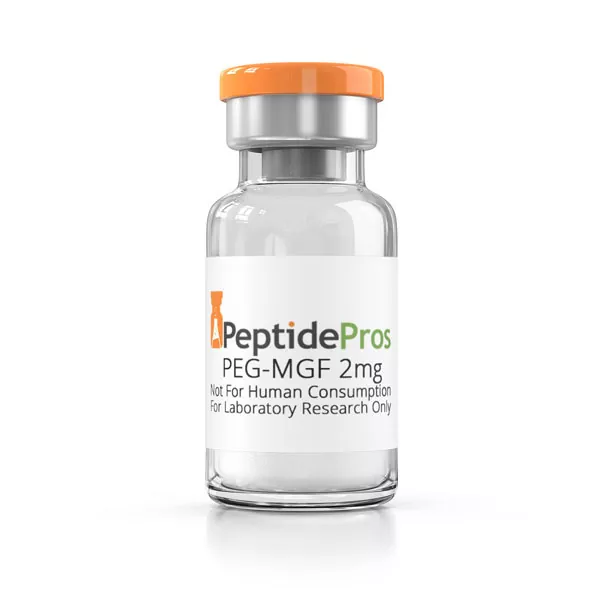
PEG MGF Pepptide is an experimental peptide compound that has attracted attention in discussions surrounding growth-factor biology, insulin-like growth factor 1 (IGF-1) signalling and skeletal muscle research. Its scientific background combines two important concepts: mechano-growth factor (MGF), an IGF-1-related splice variant, and polyethylene glycol (PEG), a polymer used in pharmaceutical research to modify the characteristics of certain molecules.
Interest in PEG MGF Pepptide is largely connected to investigations into how muscle tissue responds to mechanical stress and how growth-factor signalling influences cellular activity. These biological processes have encouraged researchers to examine different IGF-1-related compounds and their possible roles in muscle-cell development and tissue biology.
However, understanding PEG MGF Pepptide requires more than looking at its association with muscle research. Its molecular structure, relationship with naturally occurring biological pathways, experimental background and limitations of current evidence all deserve consideration.
The Science Behind PEG MGF Pepptide
To understand PEG MGF Pepptide, it is useful to examine its relationship with mechano-growth factor and the wider IGF-1 signalling system.
Insulin-like growth factor 1 is a naturally occurring protein involved in cellular growth, development and tissue maintenance. It participates in several biological pathways that influence how cells respond to physiological conditions.
The IGF-1 gene can produce different messenger RNA transcripts through a biological process called alternative splicing. One of these transcripts, commonly identified as IGF-1Ec in humans, is associated with the term mechano-growth factor.
This particular IGF-1-related form has received scientific attention because its expression can change in response to mechanical stress and physical activity.
PEG MGF Pepptide is discussed in connection with this research area. Nevertheless, the relationship between naturally occurring MGF-related transcripts, their precursor proteins and synthetic MGF-derived peptides is complex. These different molecular forms should not automatically be considered biologically identical.
How PEG MGF Pepptide Works in the Body
PEG MGF Pepptide is associated with scientific investigations into insulin-like growth factor 1 (IGF-1) signalling, a biological system involved in cellular growth, development and tissue maintenance. Its MGF-related component connects it with research examining how skeletal muscle cells respond to mechanical stress and injury, while its polyethylene glycol modification is intended to alter certain molecular properties. Although PEGylation can influence the behaviour of some molecules, the specific biological activity, metabolism, stability and effects of PEG MGF Pepptide have not been adequately established in humans. Consequently, its mechanisms and potential physiological implications remain subjects requiring further scientific investigation.
Understanding the Role of Polyethylene Glycol
One of the defining characteristics of PEG MGF Pepptide is the inclusion of polyethylene glycol, commonly shortened to PEG.
Polyethylene glycol is a polymer that has been studied extensively in pharmaceutical science. It can be attached to certain biological molecules through a process known as PEGylation.
Researchers investigate PEGylation because it can influence several molecular characteristics, including:
• Molecular stability: PEG modification may help alter how certain molecules behave under particular experimental conditions.
• Solubility: Polyethylene glycol can influence the physical and chemical properties of modified compounds.
• Clearance: In some pharmaceutical applications, PEGylation can change how quickly a molecule is removed from the body.
• Molecular behaviour: The addition of PEG chains may influence interactions between a molecule and its surrounding biological environment.
However, these general characteristics of PEGylation should not be interpreted as proven properties of PEG MGF Pepptide. Its specific pharmacokinetic behaviour and biological characteristics remain insufficiently established through human clinical research.
PEG MGF Pepptide and the Biology of Skeletal Muscle
Skeletal muscle is a complex tissue that continually responds to physical activity, mechanical loading and changes within its surrounding environment.
These responses involve multiple cellular processes and signalling pathways. Among the areas researchers have investigated are the relationships between IGF-1-related signals and satellite cells.
Satellite cells are specialised muscle-associated cells that contribute to muscle maintenance and regeneration. They can become active under certain physiological conditions and participate in processes involving cellular proliferation and differentiation.
MGF-related signalling has attracted interest because researchers have examined its possible relationship with these cellular activities.
Two processes are particularly important when understanding this research:
• Cellular proliferation: This describes an increase in the number of cells through cell division.
• Cellular differentiation: This refers to the process through which cells develop specialised characteristics and functions.
Although these processes are important in skeletal muscle biology, laboratory observations involving MGF-related compounds cannot independently demonstrate that PEG MGF Pepptide produces comparable effects in living humans.
What Distinguishes PEG MGF Pepptide From Conventional MGF?
Although the names are closely connected, MGF and PEG MGF Pepptide should not be treated as interchangeable research materials.
MGF generally refers to an IGF-1-related splice variant or, in certain research and commercial contexts, a synthetic peptide corresponding to its E-domain region.
PEG MGF Pepptide refers to a PEG-modified form marketed as a version of mechano-growth factor.
The additional polyethylene glycol component changes the molecular construction and may influence certain physical and chemical characteristics.
This distinction is particularly important when reviewing scientific literature. Findings involving naturally occurring IGF-1-related variants or unmodified synthetic MGF-derived peptides cannot automatically establish the properties, biological activity or safety profile of PEG-modified versions.
Understanding these differences helps provide a more accurate interpretation of the available research.
Scientific Research Areas Associated With PEG MGF Pepptide
Scientific interest in PEG MGF Pepptide is connected to broader investigations into growth-factor signalling and cellular biology.
Much of the available discussion concerns IGF-1 variants, synthetic MGF-related peptides and experimental models rather than PEG MGF Pepptide itself.
Several research areas provide useful biological context.
Muscle-Cell Research
Researchers have investigated how MGF-related signalling interacts with muscle precursor cells and the biological processes associated with proliferation and differentiation.
These investigations help scientists understand the complex relationship between growth-factor signalling and skeletal muscle biology.
Mechanical Stress and Cellular Responses
Mechanical loading and physical activity can influence the expression of different IGF-1-related transcripts.
Research into these responses provides insight into how muscle tissue communicates with its surrounding environment and adapts to changing physiological conditions.
Cellular Survival Mechanisms
Some experimental investigations have explored relationships between MGF-derived peptides and cellular survival pathways under specific laboratory conditions.
These findings contribute to the wider understanding of growth-factor biology, although their relevance to PEG MGF Pepptide remains uncertain.
Cardiac Tissue Investigations
MGF-related peptides have also been examined in animal research involving cardiac tissue injury and cellular stress.
Such studies form part of the broader scientific interest in IGF-1-related signalling. They should not be interpreted as evidence that PEG MGF Pepptide is an established treatment for cardiovascular conditions.
Research Limitations and Unanswered Questions
Despite the scientific interest surrounding PEG MGF Pepptide, important questions remain unanswered.
A major challenge is distinguishing findings from different experimental materials. Research involving natural MGF-related biological processes does not necessarily establish the characteristics of synthetic or PEG-modified peptides.
Several limitations deserve attention:
• Limited clinical evidence: There is no established body of peer-reviewed human clinical research demonstrating the safety or effectiveness of PEG MGF Pepptide.
• Uncertain pharmacokinetics: Its absorption, distribution, metabolism and elimination in humans have not been adequately characterised.
• Differences in molecular structure: Natural IGF-1-related variants, synthetic MGF-derived peptides and PEG-modified compounds should be evaluated separately.
• Incomplete safety information: Potential adverse effects and long-term biological consequences remain insufficiently understood.
• Unestablished therapeutic applications: No clinically validated therapeutic indication or administration protocol has been established for PEG MGF Pepptide.
These limitations highlight the importance of separating scientific interest from proven clinical outcomes.
Safety Considerations and Product Quality
Safety is an important part of evaluating any experimental compound associated with growth-factor signalling.
IGF-1-related pathways participate in cellular growth, survival and proliferation. Although these processes are essential to normal biological function, their regulation is complex.
Researchers therefore need to investigate how experimental molecules interact with these pathways and whether unintended biological effects may occur.
For PEG MGF Pepptide, adequate human safety data are lacking. This means its potential adverse effects, long-term consequences and appropriate clinical exposure limits remain unknown.
Product quality is another important consideration in laboratory research. A product description or peptide name does not independently verify its molecular identity, purity, sterility or manufacturing consistency. Analytical testing and appropriate quality documentation are necessary when evaluating materials intended for scientific investigation.
For Australian readers, regulatory considerations are also important. Therapeutic goods must comply with applicable Therapeutic Goods Administration (TGA) requirements, including Australian Register of Therapeutic Goods (ARTG) requirements where applicable. The regulatory status of a specific product should be independently verified.
Scientific interest in PEG MGF Pepptide should therefore not be confused with regulatory approval, an authorised therapeutic indication or established suitability for human use.
What Could Future PEG MGF Pepptide Research Explore?
Further investigation would be necessary to develop a clearer scientific understanding of PEG MGF Pepptide.
Researchers would need to establish its molecular characteristics and determine how polyethylene glycol modification influences its behaviour under controlled experimental conditions.
Other important areas requiring investigation include:
• Its molecular stability and structural characteristics.
• The biological activity of the PEG-modified compound.
• Its pharmacokinetic properties.
• Its interaction with relevant cellular signalling pathways.
• Its potential safety concerns and long-term biological effects.
Well-designed studies would also need to distinguish PEG MGF Pepptide from other MGF-derived and IGF-1-related research materials.
Until stronger evidence becomes available, conclusions about its pharmacological properties and possible relevance to human medicine should remain cautious.
Final Perspective on PEG MGF Pepptide
PEG MGF Pepptide represents an area of scientific interest involving peptide chemistry, polyethylene glycol modification and insulin-like growth factor 1 biology.
Its connection with mechano-growth factor has contributed to discussions about skeletal muscle research, cellular signalling and the biological responses associated with mechanical stress.
However, the scientific background of MGF-related compounds should not be confused with established evidence for PEG MGF Pepptide itself. Differences in molecular construction, experimental materials and the limited availability of human clinical data make careful interpretation essential.
For researchers and readers interested in peptide science, understanding PEG MGF Pepptide requires examining its molecular background, the wider IGF-1 research field, unresolved safety questions and current scientific limitations.
PEG MGF,
Peg mgf peptide,
Buy peg-mgf,
PEGylated Mechano Growth Factor,
Mechano Growth Factor research,
MGF and IGF-1,
PEG-MGF scientific research.