



Wfi Water: Understanding Its Uses, Types, Quality Standards and Safe Handling
Buy Wfi Water is an important preparation in pharmaceutical science, healthcare, laboratory environments and specialised research settings. Although it may appear to be a simple product, its preparation, quality standards and intended applications involve specific requirements that distinguish it from ordinary purified, distilled or drinking water.
In pharmaceutical environments, water quality is particularly important because unwanted chemicals, microorganisms and other contaminants can affect the quality and suitability of a preparation. For this reason, Wfi Water products are manufactured under controlled conditions and supplied with specifications that define their intended applications.
For people researching Wfi Water, understanding the differences between available formulations is essential. Products carrying similar names may have different compositions, packaging requirements and approved uses. Some are intended for specific pharmaceutical preparation procedures, while others are manufactured for irrigation or inhalation applications.
This guide explores the characteristics of Wfi Water, its role in pharmaceutical preparations, the differences between common formulations, important quality standards and the safety considerations associated with storage and handling.
Wfi Water in Human Healthcare
Wfi Water has several specialised applications in human healthcare, particularly in pharmaceutical preparation and certain medical procedures. Depending on its formulation, it may be used as a solvent or diluent for compatible medications, for medical irrigation or in specified inhalation applications.
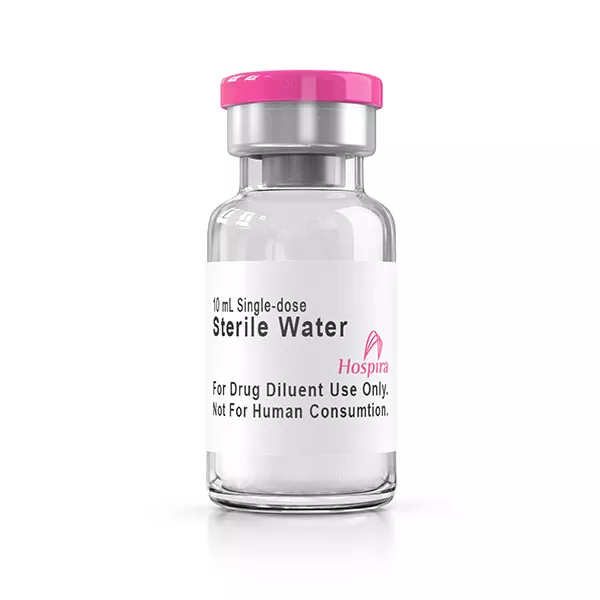
Sterile Water for Injection is one recognised pharmaceutical preparation. It is used to dissolve or dilute certain medicines when the medication manufacturer’s instructions specifically identify it as a suitable vehicle. However, it is not ordinary drinking water and must not be administered intravenously on its own. Its hypotonic nature can cause red blood cell destruction (haemolysis) if administered without appropriate solute adjustment.
Different sterile water formulations have different intended applications, and their suitability depends on the product’s approved labelling. Medical use should follow the relevant product information and guidance from qualified healthcare professionals.
What Exactly Is Wfi Water?
Wfi Water is water that has undergone a validated sterilisation process intended to eliminate viable microorganisms. Pharmaceutical-grade preparations are manufactured and packaged under controlled conditions to meet defined quality specifications.
One recognised pharmaceutical formulation is Wfi Water for Injection (SWFI). It is a sterile, nonpyrogenic preparation made from Water for Injection and contains no added bacteriostatic or antimicrobial preservative.
Unlike ordinary drinking water, Wfi Water for Injection is produced for specific pharmaceutical applications. Its chemical composition, microbiological quality and packaging are controlled according to the applicable product standards.
Its properties make it suitable as a solvent or diluent for certain medicines when specifically indicated by the medicine’s manufacturer.
However, sterile water should not be confused with bottled water, distilled water or general-purpose laboratory water. These products have different production processes, quality requirements and intended applications.
Why Is Wfi Water Important in Pharmaceutical Preparations?
Water plays an important role in pharmaceutical manufacturing, medicine preparation and laboratory science. Its quality can influence the composition, stability and suitability of different preparations.
Sterile water is particularly important in applications where microbiological control is required alongside appropriate chemical quality.
Some of its recognised roles in pharmaceutical environments include:
Preparation of pharmaceutical solutions: Certain medicines require a suitable aqueous vehicle during preparation. The selected water formulation must meet the requirements specified for the medicine.
Drug dilution: Sterile Water for Injection may be identified as an appropriate diluent for particular medicines. Compatibility must always be confirmed using the relevant product instructions.
Pharmaceutical manufacturing: Controlled water quality is important in manufacturing processes involving pharmaceutical materials and preparations.
Laboratory applications: Specialised sterile water preparations may be used in controlled research environments where their specifications are appropriate.
It is important to recognise that not every sterile water product is suitable for every pharmaceutical or laboratory application. Product identity, composition and intended use must be established before evaluating its suitability.
Different Types of Sterile Water and How They Differ
One of the most important considerations when evaluating sterile water products is understanding that the term can refer to different specialised formulations.
Although these preparations may look similar, their ingredients, packaging and intended applications can differ considerably.
Sterile Water for Injection
Sterile Water for Injection is a pharmaceutical preparation intended to dissolve or dilute compatible medicines according to their approved instructions.
It is sterile and nonpyrogenic and contains no added bacteriostatic or antimicrobial preservative.
Standard Sterile Water for Injection is generally supplied in single-dose containers. The unused portion should be discarded according to the manufacturer’s instructions after the container has been opened.
An important characteristic is that this preparation is hypotonic. It must not be administered intravenously on its own because doing so can cause haemolysis. When intravenous administration is intended, the appropriate solute must be added to produce an approximately isotonic preparation, following the relevant medicine’s instructions.
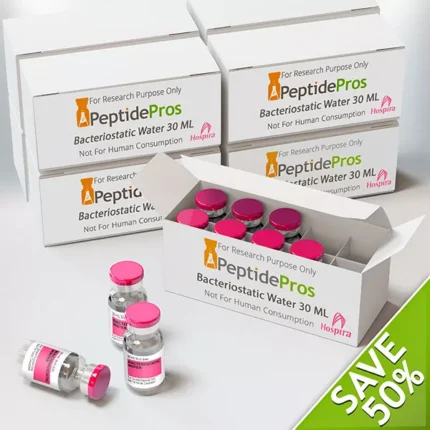
Bacteriostatic Water for Injection
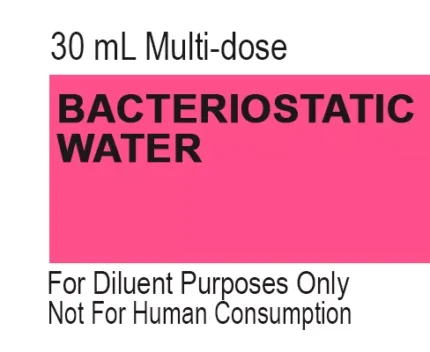
Bacteriostatic Water for Injection is another pharmaceutical preparation, but it differs from standard preservative-free sterile water.
It contains an antimicrobial preservative intended to inhibit bacterial growth. Benzyl alcohol is a commonly used preservative, although the concentration depends on the specific formulation.
This preparation is generally supplied in multiple-dose containers designed for repeated withdrawals under the conditions specified by the manufacturer.
The presence of a preservative means that bacteriostatic water should not automatically be considered equivalent to standard Sterile Water for Injection. Its compatibility and suitability depend on the medicine, formulation and intended application.
Some formulations also carry specific restrictions, including warnings concerning use in newborns.
Sterile Water for Irrigation
Sterile Water for Irrigation is manufactured for specific irrigation, washing and rinsing applications.
Although it is sterile, its formulation, packaging and intended use differ from Sterile Water for Injection.
Certain irrigation products are specifically labelled as not being suitable for injection through conventional parenteral routes. Their use must therefore remain within the applications stated on the product label.
The fact that both products contain sterile water does not make them interchangeable.
Sterile Water for Inhalation
Sterile Water for Inhalation is a specialised preparation intended for compatible inhalation-related applications.
Its composition, packaging and specifications are designed around its labelled purpose. It should only be used with compatible equipment and according to the relevant product instructions.
It must not be assumed to be interchangeable with Sterile Water for Injection or other pharmaceutical water preparations.
These distinctions demonstrate why checking the complete product description is more useful than relying on the words Sterile Water alone.
Sterile Water vs Bacteriostatic Water: What Is the Difference?
The difference between sterile water and bacteriostatic water is one of the most common areas of confusion when comparing pharmaceutical water preparations.
Both are associated with pharmaceutical applications, but their compositions and packaging characteristics are different.
| haracteristic | Sterile Water for Injection | Bacteriostatic Water for Injection |
|---|---|---|
| Sterile preparation | Yes | Yes |
| Antimicrobial preservative | None added | Contains a bacteriostatic preservative |
| Common preservative | Not applicable | Benzyl alcohol in many formulations |
| Typical packaging | Single-dose containers | Multiple-dose containers |
| Primary distinction | Preservative-free formulation | Preservative-containing formulation |
| Intended application | As specified by product labelling | As specified by product labelling |
| Interchangeability | Not automatically interchangeable | Not automatically interchangeable |
The important distinction is that sterility and bacteriostatic activity are not the same thing.
Sterility describes the microbiological condition of a preparation, while a bacteriostatic preservative is an additional ingredient intended to inhibit bacterial growth.
A preservative does not guarantee that a product will remain sterile indefinitely after opening. Appropriate handling, container integrity and manufacturer instructions remain important.
Understanding these differences helps prevent confusion when evaluating pharmaceutical water products.
What Determines the Quality of Wfi Water?
The quality of Wfi Waterdepends on more than its appearance.
A clear liquid inside a sealed container does not, by itself, establish that a product meets the necessary pharmaceutical specifications.
Several factors contribute to product quality.
Manufacturing Standards
Pharmaceutical water preparations should be manufactured under appropriate quality management systems and applicable manufacturing requirements.
Controlled production processes help maintain consistency between batches and reduce the risk of contamination during manufacturing and packaging.
Microbiological Quality
Sterility is an essential characteristic of pharmaceutical sterile water.
Manufacturers use validated sterilisation processes and appropriate quality controls to establish whether products meet their specified microbiological requirements.
Maintaining container integrity is also important because contamination can compromise a preparation after manufacture.
Endotoxin Control
Pyrogens are substances that may produce fever-related responses in the human body. Bacterial endotoxins are particularly important considerations in pharmaceutical preparations intended for parenteral applications.
For this reason, appropriate endotoxin controls and nonpyrogenic specifications form part of the quality assessment of relevant pharmaceutical water products.
Chemical Purity
Chemical contaminants and unwanted substances can affect the suitability of water for its intended pharmaceutical application.
Appropriate testing helps establish whether a preparation meets its defined chemical quality requirements.
Packaging Integrity
Packaging is another important part of pharmaceutical product quality.
A damaged seal, compromised closure or unsuitable container can affect the integrity of a sterile preparation.
For this reason, packaging quality, batch identification and traceability should be considered alongside the liquid itself.
Storage, Packaging and Product Handling
Storage and handling are important considerations when maintaining the quality of Wfi Water products.
Different formulations may have different storage requirements depending on their composition, packaging and intended application. Manufacturers provide instructions based on the specific product.
General considerations include:
• Follow the storage temperature specified on the product label.
• Keep the original packaging intact until the product is required for its intended application.
• Avoid using containers with damaged seals, leaks or visible defects.
• Check the expiry date and batch identification before use.
• Do not assume that an opened single-dose container remains suitable for later use.
• Follow the manufacturer’s instructions for handling and disposal.
• Protect the product from storage conditions that may compromise its quality.
Wfi Water should not automatically be considered suitable for extended storage after opening. Standard Wfi Water for Injection does not contain an antimicrobial preservative, which is why single-dose packaging and product-specific handling instructions are important.
How to Evaluate a Sterile Water Product
When comparing sterile water products, it is useful to look beyond the product name and examine the available quality information.
The following checklist provides a starting point for evaluating product documentation.
| Quality consideration | What to examine |
|---|---|
| Product identity | Clearly stated formulation and intended application |
| Sterility information | Relevant manufacturing and sterility assurance information |
| Endotoxin specifications | Applicable nonpyrogenic and endotoxin information |
| Composition | Whether preservatives, buffers or other ingredients are present |
| Packaging | Suitable, intact and properly sealed container |
| Batch information | Traceable lot or batch identification |
| Expiry information | Clearly stated expiration date |
| Manufacturer details | Identifiable manufacturer and product documentation |
These details help establish whether the available product information is sufficiently transparent for an informed evaluation.
A supplier’s description should not replace the manufacturer’s technical documentation, approved labelling or applicable pharmaceutical requirements.
For products supplied in Australia, it is also important to establish their relevant regulatory status and whether their marketing and intended use comply with applicable Australian requirements.
Common Misconceptions About Wfi Water
Despite its relatively simple composition, sterile water is often misunderstood.
Here are several important distinctions worth understanding.
Sterile water is not the same as distilled water.
Distillation is a purification process, while sterilisation is intended to eliminate viable microorganisms. Distilled water is not automatically sterile.
Sterile water does not automatically contain preservatives.
Standard Sterile Water for Injection contains no added bacteriostatic or antimicrobial preservative. Other specialised formulations may contain additional ingredients.
All sterile water products are not interchangeable.
Products intended for injection, irrigation and inhalation have different specifications and applications. Their intended uses should not be treated as equivalent.
Clear appearance does not prove sterility.
Visual inspection can identify certain visible defects, but it cannot independently establish microbiological quality or confirm that a product meets pharmaceutical standards.
Wfi Water is not automatically suitable for direct injection.
Wfi Water for Injection is hypotonic and must not be administered intravenously on its own. Appropriate solute adjustment is required before intravenous administration, as specified by the relevant product instructions.
Bacteriostatic water is not preservative-free sterile water.
Bacteriostatic formulations contain an additional antimicrobial preservative, which can affect their compatibility and intended applications.
Frequently Asked Questions About Sterile Water
What is sterile water used for?
Sterile water has specialised applications in pharmaceutical manufacturing, medicine preparation, certain medical procedures and controlled laboratory environments. Its suitability depends on the particular formulation and product instructions.
Is Sterile Water for Injection the same as distilled water?
No. Distilled water describes water produced through distillation, while Sterile Water for Injection is a pharmaceutical preparation that meets specific sterility and quality requirements.
What is the difference between sterile water and bacteriostatic water?
Standard Sterile Water for Injection contains no added antimicrobial preservative and is generally supplied in single-dose containers. Bacteriostatic Water for Injection contains an antimicrobial preservative and is generally supplied in multiple-dose containers.
Does sterile water contain preservatives?
Standard Sterile Water for Injection does not contain an added bacteriostatic or antimicrobial preservative. Other specialised water formulations may have different compositions.
How should sterile water be stored?
Storage requirements depend on the specific formulation and manufacturer. The product label should always be consulted for temperature, packaging and handling instructions.
Can sterile water be used for every pharmaceutical preparation?
No. Different medicines and pharmaceutical preparations require specific solvents or diluents. Only preparations identified as compatible by the relevant manufacturer should be considered.
Why is product packaging important?
Packaging helps protect a preparation and maintain container integrity. Damaged seals, leaks or compromised containers may affect the suitability of the product.
Can Sterile Water for Injection be administered directly into a vein?
No. Sterile Water for Injection is hypotonic and can cause haemolysis if administered intravenously without appropriate solute adjustment. It must be prepared according to the relevant product instructions by qualified healthcare professionals.
Final Perspective: Understanding Wfi Water Quality
Wfi Water plays an important role in pharmaceutical science because its quality extends beyond the water itself. Manufacturing controls, microbiological standards, chemical characteristics, endotoxin requirements and packaging integrity all contribute to the suitability of a preparation.
Understanding the differences between Wfi Water for Injection, Bacteriostatic Water and other specialised formulations is particularly important when evaluating pharmaceutical water products.
For anyone researching Wfi Water, the best starting point is to understand the product’s exact formulation, intended application, manufacturer information and supporting quality documentation.
Not all products described as sterile water have the same specifications or intended uses. A careful evaluation of these differences helps readers make better-informed decisions while recognising the importance of appropriate pharmaceutical standards and safe handling practices.
Sterile water,
Sterile water for injection,
Water for injection and sterile water for injection,
Sterile water injections,
Chemist warehouse sterile water,
Wfi Water,
How long does boiled water stay sterile,
How long does boiling water stay sterile.