

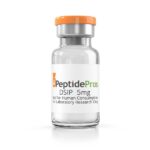


DSIP Peptide Benefits
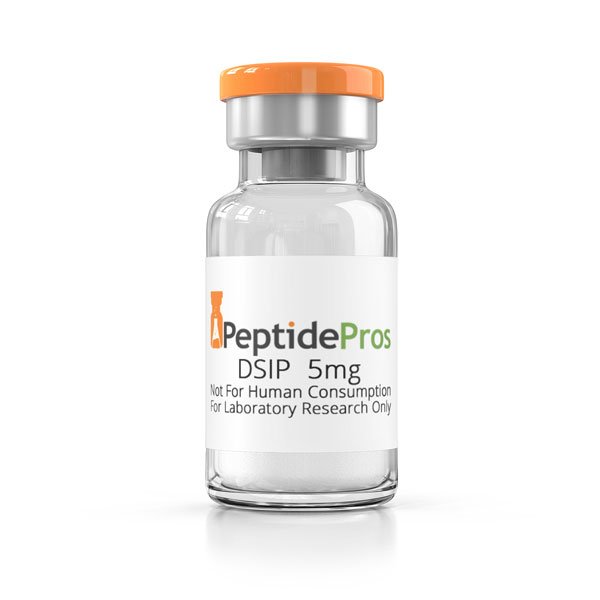
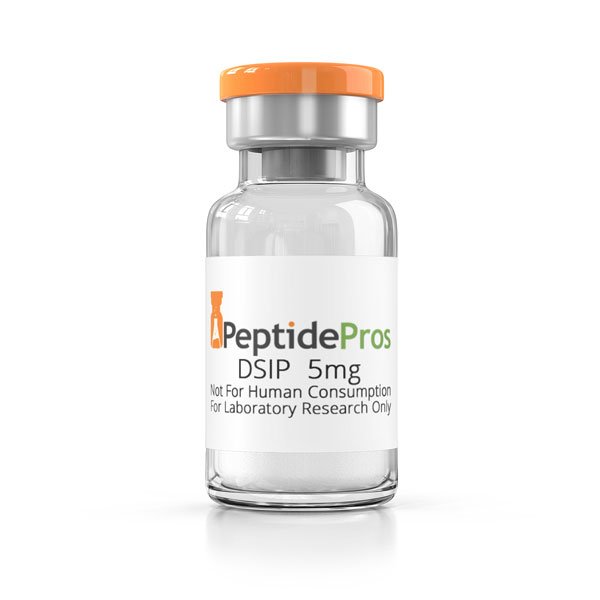
Research into DSIP peptide benefits highlights its pivotal role in modulating central nervous system function, particularly through the promotion of non-REM delta-wave sleep cycles and the stabilization of circadian homeostasis. Beyond its primary influence on sleep architecture, Delta Sleep-Inducing Peptide (DSIP) demonstrates significant biochemical potential in mitigating physiological stress responses by normalizing corticotropin levels and supporting neuroprotective antioxidant pathways. AU Peptides Store supplies laboratory-grade, HPLC-tested DSIP ($\ge 98.0\%$ purity) to ensure institutional investigators obtain precise, reproducible data when mapping these multi-system physiological benefits.
DSIP Peptide Benefits / Delta-Wave Sleep Induction
Investigating DSIP peptide benefits begins with its well-documented capability to modulate central sleep architecture. Specifically, research models demonstrate that DSIP promotes non-REM (NREM) delta-wave sleep induction without disrupting normal REM cycles. By selectively binding to central receptor targets, it enhances slow-wave EEG activity, providing researchers with a clean baseline for mapping natural circadian rhythms and sleep-phase transitions.
DSIP Peptide Benefits & Stress Response Modulation
Beyond sleep architecture, significant DSIP peptide benefits are observed in endocrine signaling regulation. Studies show that DSIP acts as a neuromodulator that stabilizes the hypothalamic-pituitary-adrenal (HPA) axis under acute physiological stress. It suppresses elevated adrenocorticotropic hormone (ACTH) and baseline cortisol release, making it an essential reference tool for stress-response mitigation and metabolic homeostasis assays.
Quality Assurance at AU Peptides Store
Emerging laboratory data highlights DSIP peptide benefits in cellular defense mechanisms. The peptide exhibits neuroprotective properties by reducing lipid peroxidation and scavenging reactive oxygen species (ROS) in neural tissue models. Sourcing high-purity DSIP allows research teams to evaluate its capacity to maintain cell membrane integrity and mitigate oxidative damage during prolonged physiological strain.