

GHK-Cu Copper Peptide
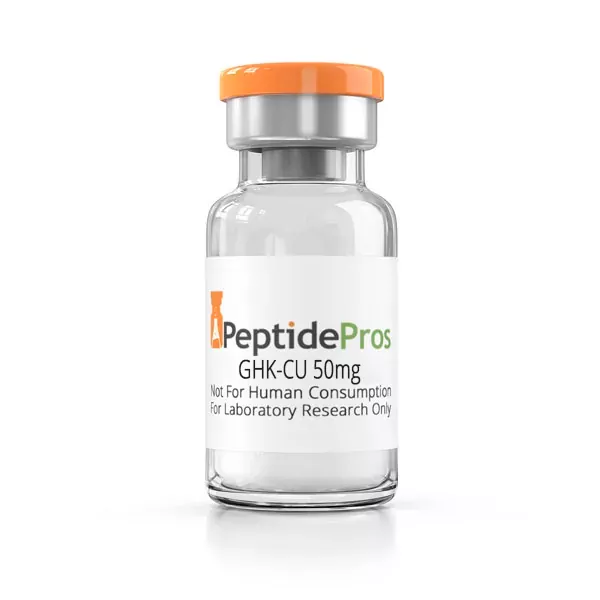
Ghk-Cu Copper Peptide is a naturally occurring tripeptide complex consisting of glycyl-L-histidyl-L-lysine bound to a divalent copper ($\text{Cu}^{2+}$) ion. In enzymatic and extracellular matrix (ECM) assays, Ghk Cu Copper Peptide serves as a vital signal peptide that modulates metalloproteinase turnover, regulates collagen and elastin synthesis, and influences gene transcription patterns associated with tissue remodeling. The high binding affinity of the imidazole ring in histidine allows stable chelation of copper ions, providing a reliable baseline standard for cellular survival and oxidative reaction studies.
GHK-Cu Copper Peptide
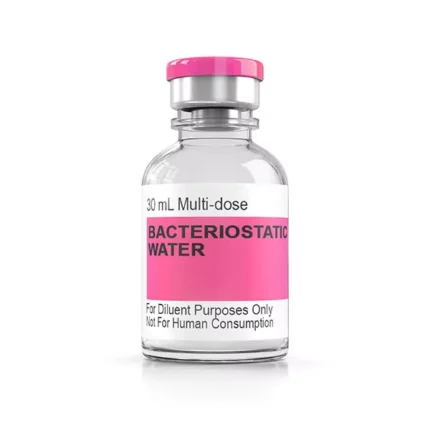
To ensure correct concentration and maintain metal-ion coordination stability:Solvent Compatibility: Hydrate the solid matrix using sterile bacteriostatic water, sterile water for injection, or phosphate-buffered saline (PBS, pH 7.4).Solubilization Method: Direct the aqueous vehicle along the glass container wall to target working concentrations between $1.0\text{ mg/mL}$ and $10.0\text{ mg/mL}$.Mixing Technique: Invert or gently swirl the vial until the solution achieves a uniform blue tint. Do not subject Ghk-Cu Copper Peptide to high-speed vortexing, high thermal environments, or strong chelating agents (such as EDTA) that could strip the complexed copper ion.
Buy GHK-Cu Peptide Online
Lyophilized Compound: Store dry vials sealed with desiccant at $-20^\circ\text{C}$ to $-80^\circ\text{C}$ for long-term storage (up to 24 months). Protect from direct light exposure.Reconstituted Solution: Reconstituted liquid phases remain stable at $2^\circ\text{C}$ to $8^\circ\text{C}$ for short-term assays (up to 30 days). For extended testing timelines, divide into single-use micro-aliquots and store at $-80^\circ\text{C}$ to prevent degradation from repeated freeze-thaw cycles.
Quality Control & Compliance Protocols
High-Performance Liquid Chromatography (HPLC): Each lot of Ghk-Cu Copper Peptide is tested to guarantee $\ge 99.0\%$ purity, ensuring absence of unbound GHK fragments or organic impurities.Mass Spectrometry (LC-MS): Verifies the precise molecular weight ($405.9\text{ g/mol}$) and elemental composition of the complex.Non-Clinical Disclaimer: Supplied strictly as a analytical reference standard for in vitro laboratory research, biochemical research, and non-clinical analytical testing.