CJC-1295 NO DAC vs Hexarelin: Differences and Peptide Research
Understanding Two Peptides Involved in Growth Hormone Research
Growth hormone regulation is a complex biological process involving several hormonal signals, receptors and feedback mechanisms. Within endocrinology, researchers have investigated different synthetic peptides to better understand how the body controls growth hormone (GH) secretion.
CJC-1295 NO DAC vs Hexarelin are two synthetic peptides associated with this area of scientific investigation. Although both are studied in connection with growth hormone release, they have different molecular structures and interact with separate receptor pathways.
CJC-1295 NO DAC is commonly identified as Modified GRF (1-29), a synthetic analogue of growth hormone-releasing hormone (GHRH). Hexarelin belongs to the growth hormone-releasing peptide family and acts through the growth hormone secretagogue receptor (GHS-R).
Understanding these differences helps explain how separate biological signalling pathways contribute to the regulation of pituitary hormone activity.
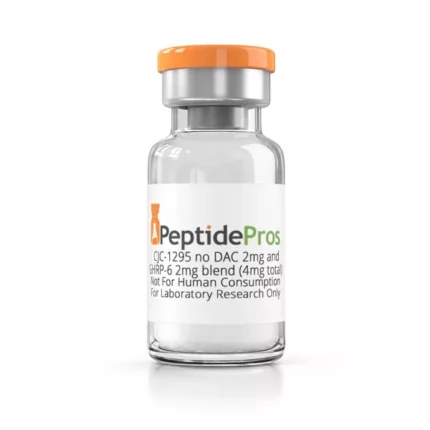
Understanding the Difference Between CJC-1295 NO DAC vs Hexarelin Blend
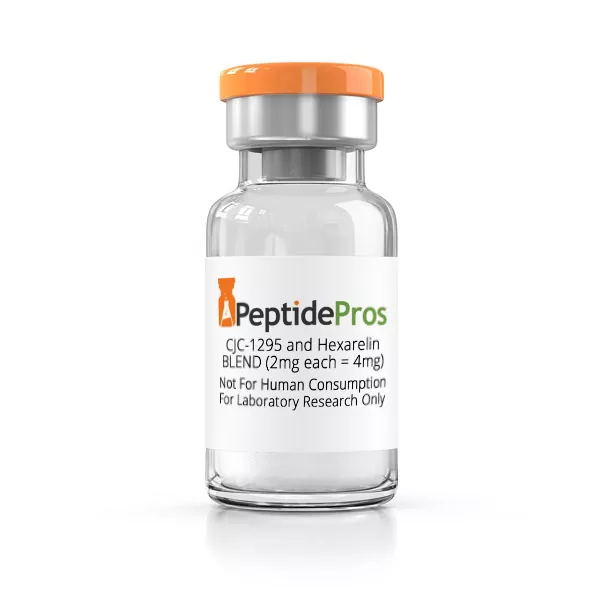
CJC-1295 NO DAC vs Hexarelin Blend differ in their molecular structures and biological mechanisms. CJC-1295 NO DAC, commonly known as Modified GRF (1-29), is a synthetic GHRH analogue associated with GHRH receptor signalling. Hexarelin is a synthetic six-amino-acid peptide that interacts with the growth hormone secretagogue receptor (GHS-R).
While both compounds have been investigated in relation to growth hormone secretion, they influence different receptor pathways. The term Hexarelin Blend refers to a formulation containing Hexarelin alongside other ingredients, depending on the specific product. Its complete composition should therefore be verified against the manufacturer’s documentation rather than assumed. Neither compound has sufficient clinical evidence to establish safety and effectiveness for unsupervised human use.
CJC-1295 NO DAC: Exploring Modified GRF (1-29)
CJC-1295 NO DAC is commonly associated with Modified GRF (1-29), a synthetic peptide based on the first 29 amino acids of human growth hormone-releasing hormone.
Naturally produced in the hypothalamus, GHRH plays an important role in communicating with the anterior pituitary gland, where it stimulates the release of growth hormone.
Modified GRF (1-29) contains amino acid modifications designed to influence its resistance to enzymatic breakdown. Unlike the longer-acting DAC-containing CJC-1295 formulation, the NO DAC version does not contain the Drug Affinity Complex responsible for albumin binding.
This structural difference influences the compounds’ pharmacological characteristics and duration of activity. Consequently, findings from studies involving DAC-containing CJC-1295 should not automatically be attributed to Modified GRF (1-29).
Hexarelin: Examining the Growth Hormone Secretagogue Receptor
Hexarelin is a synthetic hexapeptide belonging to the growth hormone-releasing peptide (GHRP) family. Its structure consists of six amino acids, and its biological activity has been investigated in connection with growth hormone secretion.
Unlike GHRH analogues, Hexarelin interacts with the growth hormone secretagogue receptor, commonly associated with the ghrelin signalling system.
This receptor is expressed in tissues including the pituitary gland and hypothalamus. Its activation is involved in growth hormone regulation and other endocrine responses.
Early human investigations demonstrated that Hexarelin can stimulate growth hormone secretion. Researchers have also examined its relationship with other hormonal markers, including prolactin, adrenocorticotropic hormone (ACTH) and cortisol.
These findings highlight the complexity of the secretagogue pathway and demonstrate that its biological activity is not restricted to a single hormone.
How Their Growth Hormone Signalling Pathways Differ
An important distinction between CJC-1295 NO DAC and Hexarelin is the way each interacts with the endocrine system.
Although both are associated with growth hormone regulation, they act through different receptor pathways.
CJC-1295 NO DAC and GHRH receptor signalling
Modified GRF (1-29) is associated with GHRH receptors located on pituitary somatotroph cells. These specialised cells produce and release growth hormone. Activation of GHRH receptors involves intracellular signalling processes that contribute to GH secretion.
Hexarelin and GHS-R signalling
Hexarelin interacts with growth hormone secretagogue receptors, which belong to the G-protein-coupled receptor family. This pathway is associated with ghrelin signalling and influences pituitary hormone activity through mechanisms distinct from conventional GHRH receptor signalling.
These differences demonstrate that growth hormone secretion is regulated through multiple interconnected biological pathways rather than a single receptor mechanism.
What Published Research Says About These Peptides
Scientific investigations involving these compounds have included laboratory experiments, animal research and early human studies. However, the available evidence differs between the two peptides.
Research involving CJC-1295 NO DAC
One important limitation is the lack of well-established controlled human clinical evidence specifically investigating Modified GRF (1-29), commonly marketed as CJC-1295 NO DAC.
Some widely discussed human research findings relate to the longer-acting CJC-1295 formulation containing DAC. These investigations examined changes in circulating growth hormone and insulin-like growth factor 1 (IGF-1).
Because the DAC modification changes the molecule’s pharmacological behaviour, findings involving that formulation cannot establish the safety, effectiveness or clinical outcomes of the NO DAC version.
Research involving Hexarelin
Hexarelin has been examined in several early human investigations.
A 1994 dose-response study involving healthy adult male volunteers investigated its effects on circulating growth hormone following intravenous administration.
Further research published in 1996 examined additional hormonal responses, reporting changes involving growth hormone, prolactin and cortisol under the experimental conditions studied.
Although these findings demonstrate biological activity, they do not establish long-term clinical benefits, approved therapeutic applications or suitability for unsupervised use.
The Relationship Between Growth Hormone and IGF-1
Growth hormone and insulin-like growth factor 1 (IGF-1) are closely connected components of the endocrine system.
Growth hormone is released primarily by the anterior pituitary gland. Once circulating through the bloodstream, it influences several tissues, including the liver, where it contributes to IGF-1 production.
IGF-1 participates in various biological processes involving cellular growth, protein synthesis and tissue development.
The relationship between these hormones is an important subject in endocrinology because changes in growth hormone activity can influence downstream hormonal signalling.
However, changes in circulating GH or IGF-1 do not automatically demonstrate improvements in muscle development, athletic performance, recovery or overall health. Such outcomes require separate and appropriately designed clinical investigations.
CJC-1295 NO DAC vs Hexarelin: Key Differences
Although both compounds are investigated in connection with growth hormone regulation, their molecular characteristics and receptor interactions are distinct.
| Characteristic | CJC-1295 NO DAC | Hexarelin |
|---|---|---|
| Compound type | Modified GHRH analogue | Synthetic hexapeptide |
| Peptide structure | 29 amino acids | 6 amino acids |
| Primary receptor pathway | GHRH receptor | GHS-R |
| Research focus | GHRH-related signalling | Secretagogue receptor activity |
| DAC component | Absent | Not applicable |
| Human research | Limited direct evidence for this formulation | Early human investigations available |
| Main research limitation | Insufficient formulation-specific clinical evidence | Limited long-term clinical evidence |
This comparison illustrates why the two peptides should be evaluated independently rather than treated as interchangeable substances.
Scientific Limitations and Safety Considerations
Despite continuing scientific interest in growth hormone signalling, important research limitations remain.
Insufficient controlled clinical evidence makes it difficult to establish the long-term safety, effectiveness and appropriate medical applications of these compounds.
Potential concerns associated with altering growth hormone pathways include changes in glucose regulation, insulin sensitivity and IGF-1 activity. Research involving Hexarelin has also identified changes in other hormonal pathways, including prolactin and cortisol responses.
Product quality is another important consideration. The identity, purity, stability and manufacturing consistency of experimental peptide materials cannot be assumed without suitable analytical verification.
Furthermore, evidence of biological activity in laboratory or early human investigations does not establish that a compound is safe or appropriate for human administration.
In Australia, therapeutic peptide products are subject to applicable Therapeutic Goods Administration (TGA) requirements. Regulatory status depends on the product, its intended purpose, presentation and applicable exemptions or authorisations. Unapproved therapeutic goods should not be assumed to be lawful to advertise or supply simply because they are described as research materials.
Conclusion: Understanding Two Distinct Growth Hormone Research Pathways
CJC-1295 NO DAC and Hexarelin represent two different approaches to investigating the biological mechanisms involved in growth hormone regulation.
Modified GRF (1-29) is associated with GHRH receptor signalling, whereas Hexarelin interacts with the growth hormone secretagogue receptor. Their different molecular structures and receptor interactions make them distinct subjects within endocrine and peptide research.
Nevertheless, scientific findings must be interpreted carefully. Human research involving DAC-containing CJC-1295 should not be treated as direct evidence for the NO DAC formulation, while early Hexarelin investigations do not establish long-term therapeutic benefits.
Understanding their molecular characteristics, signalling mechanisms and research limitations provides a clearer perspective on their place within the broader field of growth hormone science.
Scientific information notice: This article is intended for educational discussion of published research. It does not establish the safety or effectiveness of either compound for human use and should not be interpreted as medical advice.
Cjc 1295 no dac ipamorelin,
Ipamorelin cjc-1295 no dac,
Buy cjc 1295 no dac,
Cjc 1295 dac vs no dac,
Cjc-1295 no dac+ipamorelin blend,
Cjc-1295 no dac ipamorelin,
Cjc 1295 dac or no dac,
Buy hexarelin.