

Gonadotropin Peptide | Complete Guide
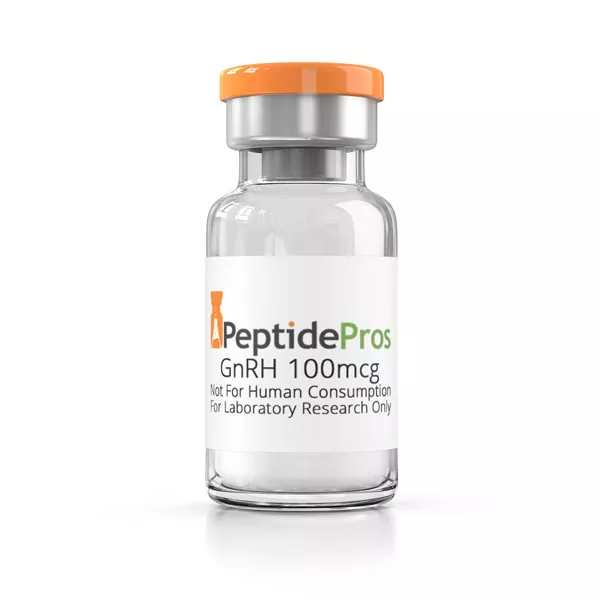
Gonadotropin Peptide (Human Chorionic Gonadotropin / hCG core sequence) functions as a potent agonist at the luteinizing hormone/chorigonadotropin receptor (LHCGR), a G-protein coupled receptor expressed in gonadal tissues and cellular models. In vitro research utilizes Gonadotropin Peptide to examine cAMP-dependent signaling cascades, steroidogenic acute regulatory protein (StAR) expression, and downstream intracellular pathway regulation in cultured Leydig and granulosa cell lines.
Understanding Gonadotropin Peptide
Gonadotropins are hormones that play a vital role in regulating the human reproductive system. They are involved in communication between the brain and the reproductive organs, helping coordinate hormone production and normal reproductive function. Researchers and healthcare professionals study gonadotropins to better understand endocrine regulation and reproductive biology.
Gonadotropin Peptide | Hormone Information
Equilibration: Allow the vial of Gonadotropin Peptide to reach room temperature ($20^\circ\text{C}$ to $25^\circ\text{C}$) prior to reconstitution to prevent moisture condensation.
Diluent Addition: Slow-drip $1.0\text{ mL}$ to $2.0\text{ mL}$ of sterile diluent down the glass vial wall.
Dissolution: Rotate the vial gently until the lyophilized matrix clears completely. Do not shake or vortex, as shear forces can denature fragile peptide chain configurations.
Gonadotropin Peptide | Educational Resource
High-Performance Liquid Chromatography (HPLC): Confirms $\ge 99.0\%$ chemical purity and verifies the total absence of synthesis fragments or uncoupled amino acids.
Liquid Chromatography-Mass Spectrometry (LC-MS): Validates structural molecular mass and sequence alignment against analytical references.
Compliance Notice: Supplied strictly as a reference standard for in vitro laboratory research, analytical assays, and biochemical testing. Not for human, veterinary, or therapeutic use.